


Do not ██ █ ████ to ██ this page!

PROTECT-IP is a bill that has been introduced in the Senate and the House and is moving quickly through Congress. It gives the government and corporations the ability to censor the net, in the name of protecting "creativity". The law would let the government or corporations censor entire sites-- they just have to convince a judge that the site is "dedicated to copyright infringement."
PROTECT IP / SOPA Breaks The Internet from Fight for the Future.
The government has already wrongly shut down sites without any recourse to the site owner. Under this bill, sharing a video with anything copyrighted in it, or what sites like Youtube and Twitter do, would be considered illegal behavior according to this bill. According to the Congressional Budget Office, this bill would cost us $47 million tax dollars a year — that's for a fix that won't work, disrupts the internet, stifles innovation, shuts out diverse voices, and censors the internet. This bill is bad for creativity and does not protect your rights.

STOP SOPA





 Everything in life is like a tree. It all starts with a


 With more than 50 million downloads across all platforms, the game has been named one of the most popular games out at the moment. Angry Birds has been exalted for its wonderful union of addictive gameplay, humorous style and cheap price. Its popularity has brought about offers to develop versions of Angry Birds for PCs and consoles, a market for goods combining its heroes and even long-term plans for a movie or TV series.


 (13+) Crush the Castle series - Armor Games
 Whether and to what extent we should simplify our lives and get "back to basics" is a debate that has been going on since the invention of writing. As the rate of technological progress increase at an accelerating pace, a counter trend is emerging where technological development is not inherently synonymous with progress. Proponents of Appropriate Technology (AT) argue that progress can only be achieved with technology that is designed with special consideration to what it is intended for.
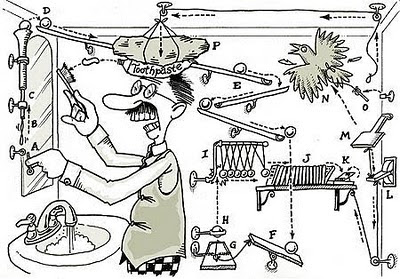 Anything you can do, a machine could theoretically do faster, better, more efficiently but is this really true? The GPS software on my cell phone, for example, can navigate me from one place to another much faster and more efficiently than a human navigator could except that the GPS stops working if I blunder into an area into which the network's signal won't reach. My calendar, which is on the Internet, can be reached from any computer or from my cell phone, and updated from both places. It will send me automated reminders to do things at a certain time but sometimes the reminders themselves will slow me down, or a reminder will come into my phone when I'm trying to talk to someone or when I'm trying to use that GPS locator -- oops, just missed that turn -- thanks, GCal.


 Here is the deal; but keep breathing as you read. I've been working on this question for about 25 years. Never quite got around into putting it efficiently so I tried not to post

